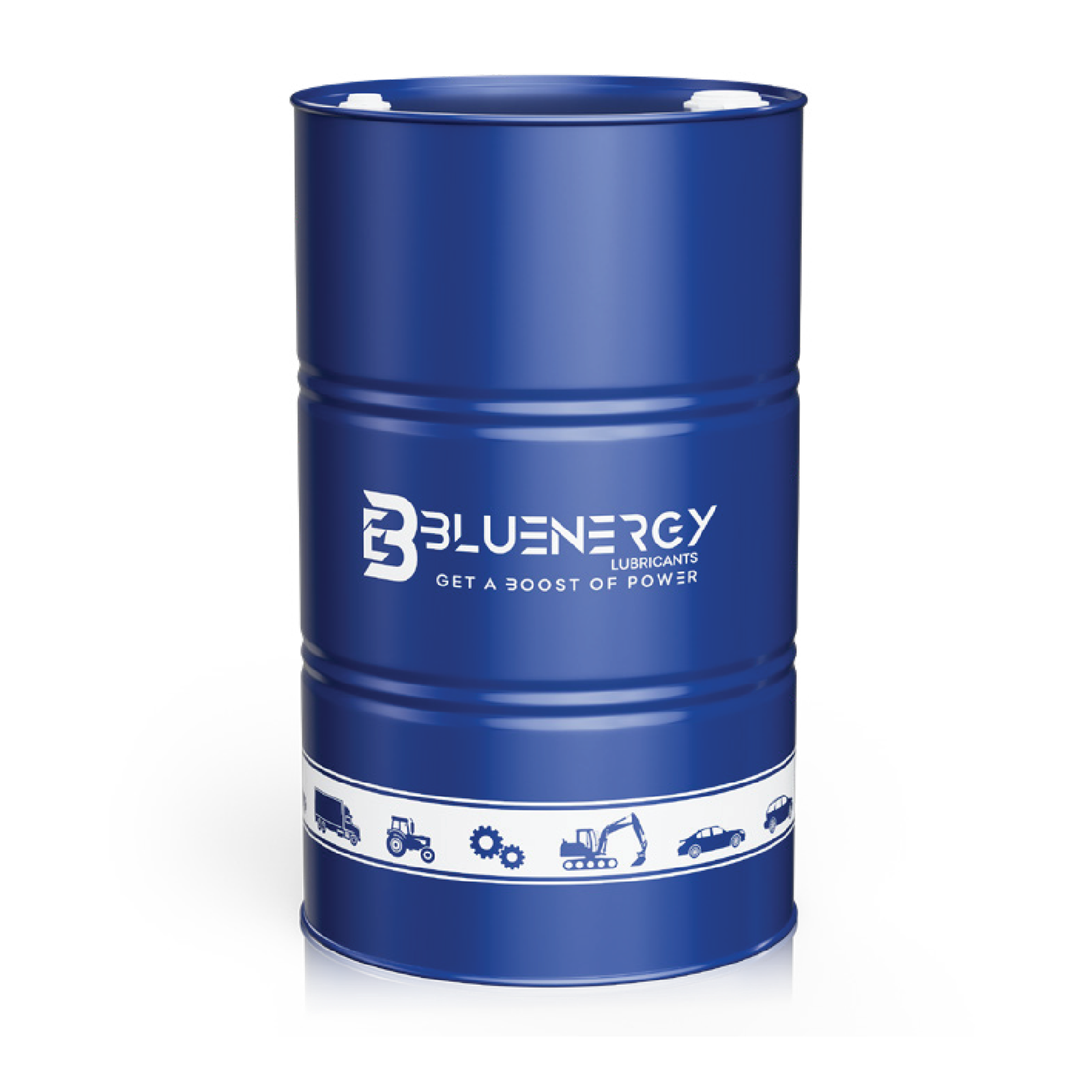
Industrial Gear Oil
Gear series of lubricants are supreme performance industrial gear oils, formulated with high quality base stocks fortified with sulfur-phosphorus additive system. They are designed to work efficiently in all types of enclosed gear drives with circulation or splash lubrication systems, where outstanding extreme pressure characteristics (EP/AW properties), extremely high load carrying capability and excellent demulsifying properties are desired. Moreover they offer extremely high protection against Micro pitting, wear and corrosion in enclosed gears and all types of oil lubricated bearings. Suitable for use in large & small spur bevel, spiral, helical & herringbone gears.
Description
Features & Benefits
- High thermal & oxidation stability protects against deposit formation and oil thickening, thus enhances the life and performance of lubricant.
- Excellent protection from bearing wear and high load carrying property extends the life of components.
- Excellent gear protection from micro pitting & scuffing and outstanding extreme pressure performance.
- Excellent rust and corrosion protection for longer component life.
- Compatible with elastomer seals and gaskets, leads to minimum leakage and reduced contamination.
- Excellent demulsifying properties, low foaming and good air release characteristics.
Specifications
Industrial Gear series meets or exceeds following International and Builder specifications:
- DIN 51517-3 (CLP)
- David Brown
- ISO 6743-6 & ISO 12925-1 (CKC/CKD)
- Fender BA 7300, table A
- US Steel 224
- David Brown S1.53.101
Typical Characteristics
| Industrial Gear Oil Series | Test Method | Units | 68 | 100 | 150 | 220 | 320 |
|---|---|---|---|---|---|---|---|
| ISO Viscosity Grade | ISO 3448 | – | 68 | 100 | 150 | 220 | 320 |
| Density @ 15 0C | ASTM D 4052 | gm/cc | 0.880 | 0.887 | 0.894 | 0.898 | 0.894 |
| Viscosity @ 40 0C | ASTM D 445 | cSt | 68.9 | 100.8 | 150.2 | 220.5 | 320.9 |
| Viscosity @ 100 0C | ASTM D 445 | cSt | 8.72 | 11.15 | 14.56 | 18.75 | 23.95 |
| Viscosity Index | ASTM D 2270 | – | 98 | 95 | 95 | 95 | 95 |
| Sulfated Ash | ASTM D 874 | wt% | <0.01 | <0.01 | <0.01 | <0.01 | <0.01 |
| Pour Point | ASTM D 97 | °C | -21 | -27 | -24 | -24 | -24 |
| Flash Point (COC) | ASTM D 92 | °C | 234 | 246 | 272 | 248 | 248 |
| Copper Strip Corrosion | ASTM D 130 | – | 1B | 1B | 1B | 1B | 1B |
| Rust Characteristics Proc B | ASTM D 665 | – | Pass | Pass | Pass | Pass | Pass |
| Foam Seq I,II,III | ASTM D 892 | ml/ml | 10/0 | 10/0 | 10/0 | 10/0 | 20/0 |
The above figures are typical of blends with normal production tolerance and do not constitute a specification.